Language


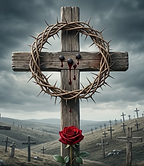


Claiming he is God
Search Results
Search this site
265 results found with an empty search
- If you don't listen and respond | Answers 4 Saints
Home If you don't listen and respond But a person who does not belong to Him will always find a reason to ignore the call. They will call it 'outdated,' they will hide behind a cheap definition of grace, or they will simply turn a deaf ear so they can keep running their own life." If you don't listen and respond The midday sun was baking the parched earth when young Caleb walked into the barn, his face twisted in frustration. He flung his leather work gloves onto a stack of hay and sat down heavily on a wooden crate. Malachi was in the corner, quietly sorting through a bucket of copper fittings, his movements deliberate and calm. He looked up at his grandson, noticing the tense set of the boy’s shoulders. "You look like you've been arguing with the wind, Caleb," Malachi said mildly. "I feel like I have," Caleb muttered, rubbing his face. "I was down at the feed store talking with some of the guys from the big church in town. We got to talking about the scriptures—about how the Father set apart the Seventh-day Sabbath as a perpetual covenant, and how His instructions on honesty and mercy apply to our everyday business. But every time I brought up a passage, they just brushed it off. They said, 'That’s just legalism, Caleb. We don’t need to look at those old laws anymore.' It was like they couldn't even hear what the text was plainly saying. How can people say they love the Creator but completely tune out what He actually says?" Malachi set down a brass union, walked over to the barn door, and picked up a weathered wooden whistle hanging from a peg. He stepped out onto the grass and blew a single, sharp note that echoed across the pasture. The Response of the Flock For a few seconds, the field remained still. Then, near the edge of the pond, three red-and-white cows lifted their heads from the grass. They turned their ears toward the barn, let out a low bellow, and immediately began walking up the hill toward Malachi. At the exact same time, a stray black heifer belonging to a neighboring ranch—which had slipped through a broken fence line earlier that morning—didn't even look up. She kept chewing her clover, completely indifferent to the sound. Malachi walked back inside the shade of the barn and hung the whistle back on its peg. "Look out there, Caleb," Malachi said, gesturing toward the approaching cattle. "Why did my cows drop what they were doing and head this way, while that stray didn't even budge?" "Because your cows know your voice, Grandfather," Caleb said. "They know you're the one who feeds them and takes care of them. They belong to you." "Exactly," Malachi said, sitting down on the bench beside his grandson. "The whistle makes the same sound across the whole pasture. But only the ones that belong to the master will register the sound and change their direction. The stray doesn't respond because I am not her master. My voice means nothing to her nature." The Razor of the Word Malachi reached into his pocket and pulled out his worn leather scripture, flipping the soft, creased pages to the Gospel of John. He placed his finger firmly on the text of John 8:47 and read the words of the Messiah aloud: “He who is of God hears God’s words; therefore you do not hear, because you are not of God.” "When Yeshua spoke those words in Jerusalem, He was talking to the most religious, prestigious people of His day," Malachi explained, his clear eyes locking onto Caleb's. "They had the theological degrees, the long robes, and the perfect public reputations. They claimed the Creator was their Father. But when the Messiah spoke the pure, unfiltered truth of the kingdom, they got angry. They made excuses. They tried to find loopholes to justify their own traditions." The old man leaned forward. "Yeshua didn't offer them a complicated psychological explanation. He gave them a terrifyingly simple diagnosis: The one who belongs listens and responds to Yehovah's words. If you don't listen and respond, it is because you don't belong to Yehovah." The Real Proof of Ownership "It’s a hard truth, son," Malachi continued softly. "The world—and mainstream religion—likes to treat faith like a label or a membership card. People think that because they sit in a building on Sunday or say a prayer, they belong to the Household. But the true proof of ownership isn't a label. It is hearing and responding." He pointed out toward the heifer still standing idle in the distance. "A child of the Father carries His spiritual DNA, Caleb. When a true child hears the instructions of Yehovah—when they read His commandments about guarding the Sabbath, walking in integrity, and cutting away pride—their heart instantly registers the Master's voice. They don't argue with the text. They don't call it a burden. Their nature compels them to bend their knees, turn away from the lawless highway, and align their lives with the Covenant. But a person who does not belong to Him will always find a reason to ignore the call. They will call it 'outdated,' they will hide behind a cheap definition of grace, or they will simply turn a deaf ear so they can keep running their own life." Caleb looked out at the cows now gathering peacefully by the barn door, waiting for their master’s hand. The frustration that had tightened his chest all morning finally melted away, replaced by a quiet, reverent clarity. He didn't need to argue with the crowd down at the feed store anymore. The line was already drawn, as sharp and clear as the sound of the whistle in the midday air. He picked up his work gloves, looked at his grandfather, and stood up with a settled heart—ready to listen, ready to respond, and completely content to follow the voice of the One to whom he belonged.
- This is my blood of the covenant, | Answers 4 Saints
Home The blood of the covenant covers a person's bondage to sin. Rather than just pardoning past mistakes, it delivers believers from the ongoing power and mastery of sin, offering them the spiritual freedom to live a transformed life. Institution of the Lord’s Supper 26 Now as they were eating, Jesus took bread, and after blessing it broke it and gave it to the disciples, and said, “Take, eat; this is my body.” 27 And he took a cup, and when he had given thanks he gave it to them, saying, “Drink of it, all of you, 28 for this is my blood of the covenant, which is poured out for many for the forgiveness of sins. 29 I tell you I will not drink again of this fruit of the vine until that day when I drink it new with you in my Father’s kingdom.” The Meaning of the Bread and Cup The Bread: Jesus calls the broken bread His body. As noted by, Jesus says, “Take, eat; this is my body. ”The Cup: Jesus calls the wine His blood of the covenant. As recorded in scripture, this blood is “poured out for many for the forgiveness of sins. 1. The Forgiveness and Cleansing of Sins The primary coverage mentioned in the text is the remission and absolute forgiveness of sins. According to biblical theology, “the blood that is offered in atonement washes away the stain of sin.” It removes the guilt, penalty, and spiritual debt of human failure, treating the believer as though they had never sinned 2. Reconciliation and Access to God Under the Old Covenant, people were separated from God's immediate presence, and only the High Priest could enter the Holy of Holies once a year with animal blood. Jesus' blood covers the gap caused by sin, breaking down that barrier. It grants every believer direct, confident access to God's presence at any time. 3. Spiritual Liberation (Freedom)The blood of the covenant covers a person's bondage to sin. Rather than just pardoning past mistakes, it delivers believers from the ongoing power and mastery of sin, offering them the spiritual freedom to live a transformed life. 4. Direct Inheritance and Protection Just as the Passover lamb's blood on the doorposts in Egypt protected households from judgment, Jesus’ blood acts as a seal of eternal protection and redemption. It covers the believer under God's permanent family covenant, guaranteeing them the status of adopted children and an ultimate inheritance of eternal life Previous Next
- You say you are Christian | Answers 4 Saints
Home Selective Following: People often adopt the comforting aspects of the message—grace, forgiveness, and eternal assurance—while ignoring the demanding commands regarding integrity, charity, and self-denial. That tension—between claiming the name and actually living the life—is one of the oldest and most persistent frustrations in the entire faith. In fact, it is a central theme of the New Testament itself. Yeshua spoke directly to it: "Why do you call me, 'Lord, Lord,' and do not do what I say?" (Luke 6:46), and warned that trees are recognized by their fruit, not their labels. There are a few clear reasons why this disconnect happens so often: Cultural Identity vs. True Discipleship: For many, the label is treated as an inherited identity, a family tradition, or a social demographic rather than an active walk. It becomes something someone claims by default, not something lived out through daily obedience. Belief Without Surrender: It is easy to agree with a creed, wear a symbol, or attend a service once a week. It is infinitely harder to practice what Yeshua actually demanded: humility, radical generosity, forgiving enemies, controlling the tongue, and putting others ahead of self-interest. Selective Following: People often adopt the comforting aspects of the message—grace, forgiveness, and eternal assurance—while ignoring the demanding commands regarding integrity, charity, and self-denial. Human Frailty vs. Hypocrisy: There is a real difference between someone who genuinely struggles, falls short, and tries again, versus someone who uses the title as a badge of moral superiority while treating people with cruelty, selfishness, or greed. When people use faith as a shield or a weapon rather than a call to service, the hypocrisy becomes glaring. James put it bluntly in his epistle: faith without works is dead. Real following requires emulation—walking the way Yeshua walked, especially in how a person treats the poor, the hurting, and those they disagree with. When the conduct doesn't match the confession, it not only rings hollow to the people watching, but it undermines the very message they claim to believe. Previous Next
- Are you Child of God or a child the devil ? | Answers 4 Saints
Home Everyone who makes a practice of sinning also practices lawlessness; sin is lawlessness. 4 Everyone who makes a practice of sinning also practices lawlessness; sin is lawlessness. 5 You know that he appeared in order to take away sins, and in him there is no sin. 6 No one who abides in him keeps on sinning; no one who keeps on sinning has either seen him or known him. 7 Little children, let no one deceive you. Whoever practices righteousness is righteous, as he is righteous. 8 Whoever makes a practice of sinning is of the devil, for the devil has been sinning from the beginning. The reason the Son of God appeared was to destroy the works of the devil. 9 No one born of God makes a practice of sinning, for God’s seed abides in him; and he cannot keep on sinning, because he has been born of God. 10 By this it is evident who are the children of God, and who are the children of the devil: whoever does not practice righteousness is not of God, nor is the one who does not love his brother. Previous Next
- The Church lied to us | Answers 4 Saints
Home The Church lied to us The Identity Theft: He watched how Emperor Constantine and the early Roman councils cut the faith off from its Hebrew roots. They replaced the sign of the covenant—the Seventh-day Sabbath—with Rome's pagan Day of the Sun. They took the holy Moedim (the Appointed Times of Leviticus 23) and replaced them with modified fertility festivals and winter solstice celebrations. The Church lied to us The air inside the sanctuary of Grace Fellowship was cool, scented with expensive espresso, and vibrating with the bass of a professional worship band. High above the stadium seating, massive LED screens flashed the title of the morning’s sermon: Free From the Bondage of the Law. Caleb sat in the third row, watching the Senior Pastor pace the stage in designer sneakers. "God doesn't want you tracking rules, folks," the pastor proclaimed, a smooth smile catching the stage lights. "The Old Testament, the commandments, the Sabbath—that was a heavy yoke. It was nailed to the cross! We live in the age of grace. If you are trying to keep commandments, you are falling from grace."The crowd erupted in applause. People nodded, hands raised in an emotional rush of relief. For years, Caleb had nodded along too. It felt good to hear that God required nothing but a verbal confession and a weekly seat in the auditorium. But today, the applause felt hollow. That week, Caleb had been translating Matthew chapter 7 from the original Greek text. A single verse had seized his mind, refusing to let go. He opened his leather-bound Bible on his lap, looking down at the red letters of Matthew 7:23: “And then I will declare to them, ‘I never knew you; depart from Me, you who practice lawlessness!’” Caleb stared at the final word. In the Greek, the word Yeshua used wasn't just a general term for being a bad person. The word was anomia. A- (without) Nomos (the Torah / the Law). The Messiah wasn't warning against secular criminals. He was warning religious people—people who prophesied, cast out demons, and did wonders in His name—that they would be rejected because they lived without the Torah. They were practicing Torah-lessness. Caleb looked back up at the stage. The pastor was currently explaining why the biblical food laws didn't matter and why the Seventh-day Sabbath was an outdated Jewish tradition. A chilling realization washed over Caleb, striking him with the force of a physical blow: The church lied to us. We have institutionalized the very thing the Messiah warned would disqualify us. The Investigation That afternoon, Caleb didn't go to the church's Sunday football mixer. He sat at his kitchen table, surrounded by history textbooks, lexicons, and the scriptures. The deeper he dug, the more the grand illusion crumbled. He began to see that mainstream Christianity had achieved a bizarre, unprecedented status: it had become the most explicitly lawless religion on earth. Every other faith on the planet—from Islam to Buddhism to Judaism—expected its followers to strictly adhere to the foundational instructions of its deity. Only mainstream Christianity possessed a theological framework that actively argued against obeying the written commandments of its own Creator. He traced the historical trail back to Rome, watching the pieces slide into place like gears in a sinister machine: The Deception of "Grace": He saw how the letters of Paul had been systematically twisted—just as Peter warned they would be (2 Peter 3:16)—to make it look like grace was a license to disregard God's instructions, rather than the divine empowerment to actually keep them. The Identity Theft: He watched how Emperor Constantine and the early Roman councils cut the faith off from its Hebrew roots. They replaced the sign of the covenant—the Seventh-day Sabbath—with Rome's pagan Day of the Sun. They took the holy Moedim (the Appointed Times of Leviticus 23) and replaced them with modified fertility festivals and winter solstice celebrations. The Shifting Sand: By throwing away the immutable standard of the Torah, the church had left itself with no anchor. Morality became whatever the cultural consensus allowed. The church hadn't just made a mistake; they had traded the eternal, unchanging Word of the Father for a human political system, slapping the Savior's name on the front of it. The Confrontation The next evening, Caleb met with his small group leader, Thomas, at a quiet local diner. Caleb brought his Bible, heavily underlined. "Thomas, I need to ask you about something," Caleb said, sliding the text forward. "If Yeshua says that those who practice anomia—lawlessness, or living without the Torah—will be told 'I never knew you,' why does our church teach that the Torah is obsolete?" Thomas sighed, taking a sip of his coffee with the patient, slightly condescending smile of a seasoned ministry veteran. "Caleb, buddy, you're falling into legalism. We aren't under the law, we're under grace. Christ fulfilled the law so we don't have to look at it anymore. That's Old Testament stuff. It's for the Jews." "But God says His laws are a perpetual covenant throughout our generations," Caleb argued, his voice tight but controlled. "Yeshua said in Matthew 5 that not one jot or tittle would pass from the Law until heaven and earth pass away. Heaven and earth are still here, Thomas. If we tell people they don't have to keep the commandments, aren't we teaching the exact lawlessness He warned against?" Thomas’s smile faded. The warmth vanished from his eyes, replaced by a defensive coldness. "Look, Caleb, that kind of thinking is dangerous. It divides the body. If you start digging into the Hebrew roots and the Sabbath and all that, you're going to alienate people. Our church is about bringing people in, not burdening them with ancient rules. We have freedom in Christ." "Freedom to sin?" Caleb asked softly. "Scripture defines sin as the transgression of the law (1 John 3:4). If you take away the law, you redefine sin. If the church is telling people they can break the Sabbath, ignore the Feasts, and disregard God's instructions without consequence, the church isn't saving people—it's comforting them on the Broad Way." Thomas slid his chair back, standing up. "I think you need to take a break from leading your ministry team, Caleb. You’re entering some very toxic theological waters. Let me know when you're ready to get back to pure grace." The Exit Caleb sat alone in the diner booth for a long time, watching the neon signs flicker outside. The realization was heavy, but it didn't feel like a burden. It felt like reality breaking through a fever dream. The church had built a magnificent cage. They had created a multi-billion-dollar industry designed to give people the emotional high of worship while completely absolving them of the requirement of covenant loyalty. It was a masterpiece of religious deception: a faith that claimed the Messiah but rejected the very Torah He embodied. The following Friday evening, as the sun began to dip below the horizon, Caleb didn't prepare his clothes for Sunday morning. Instead, he cleaned his house. He turned off his phone. As the twilight deepened, marking the arrival of the true Seventh-day Sabbath, he lit a candle at his kitchen table. He opened the Torah to Genesis, reading the ancient words with fresh eyes—unfiltered by church programs, denominational CEOs, or Roman traditions. For the first time in his life, Caleb wasn't just playing a part in a religious audience. He was stepping back into the shipping lanes of the Patriarchs, realizing that true love for the Creator wasn't a fleeting emotion on a Sunday morning—it was a heart circumcised by the Spirit, walking in joyful, fierce obedience to every word that proceeds from the mouth of God.
- Leviticus food laws | Answers 4 Saints
Home Leviticus food laws The Creator built a whole ecosystem, and every creature has a specific job. Pigs and shrimp weren't designed to be a food source for us; they were created to be the cleanup crew." Levitus Food laws The kitchen was quiet except for the steady sizzle of the iron skillet. Robert was leaning over the stove, tossing a handful of pink shrimp into the pan alongside thick ribbons of browning country ham. The savory, heavy aroma filled the room—a smell that had meant Saturday morning comfort for as long as Thomas could remember. But today, it just felt like a barrier. Thomas stood near the doorway, his eyes fixed on the skillet. "Dad, I can't have any of that. I'm staying away from the pork and the shellfish." Robert exhaled heavily, turning down the burner. He wiped his hands on a dish towel and looked at his son, his face lined with frustration. "Thomas, we’ve been through this. It’s just breakfast. It feels like every time we sit down to a meal lately, you're policing the plates. It’s creating a wall between us." "I'm really not trying to be the food police, Dad," Thomas said gently, stepping closer to the counter so he wasn't standing at a distance. "And it's not just about trying to be holier than anyone else. There’s a practical, design reason behind these instructions." The Design of the Scavenger Robert crossed his arms, listening but skeptical. "A design reason? It's meat, Thomas. People have eaten it for generations." "Think about what those animals actually do," Thomas explained, pointing toward the stove. "The Creator built a whole ecosystem, and every creature has a specific job. Pigs and shrimp weren't designed to be a food source for us; they were created to be the cleanup crew." Thomas stepped up to the counter and gestured toward the bowl that had held the seafood. "Look at shrimp. They live at the very bottom of the water. They are bottom-feeders—biological filters designed to consume decomposing matter, dead fish, and whatever waste sinks to the floor. They absorb everything in their environment to keep the waters clean. When we eat them, we're eating the vacuum cleaners of the ocean." Robert looked down at the skillet, where the shrimp were curling and turning bright pink against the ham. "And the swine is the exact same thing on land," Thomas continued quietly. "A pig will eat absolutely anything—decaying matter, waste, scraps that would make any other animal sick. Because of that lifestyle and their specific digestive systems, these animals carry all kinds of diseases, parasites, and toxins that don't get filtered out the way they do in clean animals like cattle or sheep. Their bodies are built to process filth so the rest of the earth stays clean. They are scavengers, Dad. They do a vital job for the planet, but they were never meant to be put on our plates." Honor and Understanding Robert looked at the pan for a long moment, the anger leaving his posture, replaced by a thoughtful silence. He didn't completely agree, but hearing the reasoning explained this way changed how he saw his son's choices. It wasn't a sudden, arrogant whim or an attempt to look down on the family's traditions; it was a deeply held conviction based on design and health. "So it's about respecting how things were made," Robert said slowly. "Yes, Dad," Thomas said, offering a small smile. "I want to be obedient to the instructions because I believe the instructions are there to protect us. But I also want to honor you and Mom. I don't want my choices to drive a wedge into this family." Thomas reached past his father and grabbed a second, clean skillet from the cabinet. He placed it on the neighboring burner and cracked a few eggs into it, keeping his breakfast completely separate but staying right there in the kitchen. Robert watched him for a second, then nodded, sliding the spatula over to give Thomas room. "Well... I can't argue with a man wanting to take care of his health and follow his conscience. Let's just finish cooking breakfast together." The two skillets cooked side by side on the stove—different foods and different understandings, but handled with mutual respect that kept the peace at the family table.
- The Sword of Truth & Separation | Answers 4 Saints
Home In Matthew 10:34, Yeshua makes one of His most shocking and frequently misunderstood statements: "Do not think that I came to bring peace on earth. I did not come to bring peace but a sword." In Matthew 10:34, Yeshua makes one of His most shocking and frequently misunderstood statements: "Do not think that I came to bring peace on earth. I did not come to bring peace but a sword." Historically, culturally, and textually, this passage is not a call to physical violence or holy war. Instead, it is a prophetic warning about the unavoidable friction, division, and ultimate cost that comes with choosing the truth over compromise. 1. Context: The Cost of Discipleship Yeshua spoke these words while sending out His twelve disciples (Matthew 10:1–42), preparing them for the reality of persecution. Up to this point, many expected the Messiah to immediately usher in a political, earthly peace by overthrowing Roman rule and uniting the nation. Instead, Yeshua reframes their expectations: The "Sword" is Division: He immediately defines the "sword" in the following verses: "For I have come to set a man against his father, a daughter against her mother, and a daughter-in-law against her mother-in-law; and a man’s enemies will be those of his own household" (Matthew 10:35–36). Family vs. Truth: In the ancient Near East, family was the ultimate safety net, identity, and religious authority. To leave the family's traditions to follow Yeshua was viewed as a betrayal. Yeshua was warning that the truth would pierce through even the closest human bonds. 2. The Sword of Truth & Separation Throughout Scripture, the "sword" is frequently used as a metaphor for the cutting, separating power of God’s word: Hebrews 4:12: "For the word of God is living and active, sharper than any two-edged sword, piercing to the division of soul and of spirit... and discerning the thoughts and intentions of the heart." Ephesians 6:17: Describe's God's word as the "sword of the Spirit." Revelation 1:16: Describes Yeshua with a "sharp two-edged sword" coming out of His mouth—representingHis words of judgment and truth. The "sword" Yeshua brings is the truth itself. When the truth is spoken, it acts as a sword that divides those who receive it from those who reject it. It leaves no room for comfortable, lukewarm neutrality. 3. Choosing the Father Over Family Approval Following this statement, Yeshua states the ultimate standard of discipleship: Matthew 10:37: "He who loves father or mother more than Me is not worthy of Me. And he who loves son or daughter more than Me is not worthy of Me." The "Sword" is Decision: If family, culture, or religious peer pressure demands that you compromise on the commandments of Yehovah, the "sword" of Yeshua forces a choice. You cannot please both the world and the Creator. 4. True Peace Requires Truth First Yeshua is the "Prince of Peace" (Isaiah 9:6), and He promises His followers a deep, internal peace (John 14:27). However, Scripture reveals that there is no genuine peace without first establishing righteousness and truth. A False Peace: To try to maintain "peace" by watering down the word, accepting falsehoods, or ignoring the Father's commandments is to practice a fake, temporary peace. The Messianic Reality: Yeshua's first coming was to convict, separate, and call out a remnant (the sword). His second coming will be to establish true, lasting cosmic peace after judgment has finished its work. Ultimately, "not peace but a sword" means that following the truth is disruptive. It will cost you relationships, comfort, and sometimes family approval—but to compromise the truth for the sake of an easy life is to lose your soul. Previous Next
- Set Apart being Holy or Sancified | Answers 4 Saints
Home Being set apart means allowing the Spirit and the Word to burn off the cynicism, rebellion, compromises, and habits of the surrounding culture until the character of Yeshua is clearly reflected in your everyday conduct. In the Scriptures, being "set apart" corresponds directly to the Hebrew concept of Kadosh (קָדוֹשׁ) and the Greek Hagios (ἅγιος), traditionally translated as "holy" or "sanctified." It means being separated from common, worldly patterns and consecrated solely for God's divine purpose. Everyday Practical Examples of Living Set Apart Speech and Integrity: Choosing truthfulness, restraint, and encouraging words in environments where gossip, crude humor, anger, or deceit are considered normal workplace or social banter (Ephesians 4:29). Rhythms of Rest and Worship: Guarding dedicated time—such as keeping the Sabbath—to cease regular labor and worldly distractions, demonstrating that trust and provision rest in God rather than endless striving (Exodus 20:8–11). Conscientious Consumption: Being mindful about what enters the mind and the home—evaluating entertainment, media, and personal habits by God’s standards rather than prevailing cultural trends (Philippians 4:8). Practical Everyday Examples Guarding the Eyes and Media Habits: Choosing not to stream shows, films, or music centered on gratuitous violence, sexual immorality, or blasphemy—deliberately turning away from content the broader culture consumes as default entertainment (Psalm 101:3). Fair Dealing and Honest Stewardship: Refusing to cut corners on taxes, invoices, or business deals, even when industry peers say "everyone does it." Keeping an honest scale in commerce directly reflects God's holiness (Proverbs 11:1). Forgiveness and Non-Retaliation: Refusing to harbor grudges, retaliate, or drag personal feuds through legal or social warfare when wronged, choosing instead to bless and entrust justice to God (Romans 12:17–19). Modesty and Demeanor: Approaching dress, appearance, and public presentation with humility rather than striving for status, attention, or conforming to provocative trends (1 Timothy 2:9–10). Chosen and Belonging to God 1 Peter 2:9 — "But you are a chosen race, a royal priesthood, a holy nation, a people for his own possession, that you may proclaim the excellencies of him who called you out of darkness into his marvelous light." Deuteronomy 7:6 — "For you are a people holy to the Lord your God. The Lord your God has chosen you out of all the peoples on the face of the earth to be his people, his treasured possession." Psalm 4:3 — "Know that the Lord has set apart his godly servant for himself; the Lord hears when I call to him." Jeremiah 1:5 — "Before I formed you in the womb I knew you, before you were born I set you apart; I appointed you as a prophet to the nations." Distinct from the World Romans 12:2 — "Do not conform to the pattern of this world, but be transformed by the renewing of your mind. Then you will be able to test and approve what God’s will is—his good, pleasing and perfect will." 2 Corinthians 6:17 — "Therefore, 'Come out from them and be separate, says the Lord. Touch no unclean thing, and I will receive you.'" John 17:14–17 — "They are not of the world, even as I am not of it. Sanctify them by the truth; your word is truth." Leviticus 20:26 — "You are to be holy to me because I, the Lord, am holy, and I have set you apart from the nations to be my own." Sanctification and Purity of Life 1 Peter 1:15–16 — "But just as he who called you is holy, so be holy in all you do; for it is written: 'Be holy, because I am holy.'" 1 Thessalonians 4:3–4, 7 — "It is God’s will that you should be sanctified: that you should avoid sexual immorality; that each of you should learn to control your own body in a way that is holy and honorable... For God did not call us to be impure, but to live a holy life. "Leviticus 20:7–8 — "Consecrate yourselves and be holy, because I am the Lord your God. Keep my decrees and follow them. I am the Lord, who makes you holy." Prepared for the Master's Use 2 Timothy 2:21 — "Those who cleanse themselves from the latter will be instruments for special purposes, made holy, useful to the Master and prepared to do any good work." Galatians 1:15 — "But when God, who set me apart from my mother’s womb and called me by his grace, was pleased to reveal his Son in me..." Ephesians 1:4 — "For he chose us in him before the creation of the world to be holy and blameless in his sight." Previous Next
- Definitions with eternal consequences. | Answers 4 Saints
Home Definitions with eternal consequences. There are 40 different Definitions with eternal consequences. Altar Calls Common Tradition: Walking down an aisle to an "altar" to be saved. Scriptural Reality : 19th-century revivalist innovation (Charles Finney), not an apostolic practice. Key Verses: Acts 8:35–38 Christmas Origins & Customs Common Tradition: Celebrating Christ's birth on Dec 25 with decorated trees inside the home. Scriptural Reality: Dec 25 originated from pagan winter solstice festivals celebrated centuries before Yeshua’s birth (e.g., Roman Saturnalia established ~5th century BC, over 400–500 years prior, alongside ancient evergreen tree veneration). Scripture explicitly commands not to adopt heathen worship customs—such as cutting a tree, decorating it with silver and gold, and fastening it with hammers so it does not topple. Key Verses: Deuteronomy 12:30–32, Jeremiah 10:2–5 Church Buildings Common Tradition: Treating the physical auditorium as the "House of God." Scriptural Reality: In the New Covenant, the physical sanctuary is irrelevant; believers are the temple of the Holy Spirit. Key Verses: Acts 7:48–49, 1 Corinthians 6:19 Crucifixion Timeline Common Tradition: Good Friday death to Easter Sunday sunrise (~36 hours). Scriptural Reality: Scripture requires 3 full days and 3 full nights; an annual "High Sabbath" occurred before the regular weekly Sabbath. Key Verses: Matthew 12:40, John 19:31 Death & the Grave Common Tradition: Souls immediately ascend to heaven or burn in hell right at the moment of death. Scriptural Reality: The dead "sleep" in the grave (Sheol / Hades) unconscious, awaiting the bodily resurrection and final judgment at Christ's return; no one has ascended into heaven except the Son of Man. Key Verses: Ecclesiastes 9:5, John 3:13, John 5:28–29, 1 Thessalonians 4:13–16 Dietary Laws (Leviticus 11) Common Tradition : Believers can eat any animal; unclean meats are now cleansed. Scriptural Reality: Unclean animals remain unbiblical to eat; Leviticus food laws define what God created as food. Peter’s vision was about accepting Gentile people, not eating pork or unclean beasts. Key Verses: Leviticus 11:1–47, Acts 10:28, Isaiah 66:17 Do Not Add or Diminish Common Tradition: The church possesses the authority to alter, amend, or dismiss biblical commands over time. Scriptural Reality : Yehovah strictly commands never to add to or take away from His Word or His commandments. Key Verses: Deuteronomy 4:2, Deuteronomy 12:32, Revelation 22:18–19 Easter Origins Common Tradition: Celebrating the resurrection with eggs, rabbits, and sunrise services named "Easter." Scriptural Reality: Named after the pagan fertility goddess (Ishtar / Ēostre); pre-dated the Messiah. Yehovah commanded the observance of Passover (Pesach) and Firstfruits, not pagan fertility customs. Key Verses: Ezekiel 8:14–16, Leviticus 23:4–11 Faith Defined Common Tradition: A mere mental acknowledgment or intellectual belief without action. Scriptural Reality : Biblical faith (emunah) is active fidelity and obedience; faith without works is dead. Key Verses: James 2:17–24, Hebrews 11:8 God Gives the Spirit to the Obedient Common Tradition: The Holy Spirit is poured out unconditionally, independent of repentance or obedience. Scriptural Reality: Scripture explicitly declares that God gives the Holy Spirit to those who obey Him. Key Verses: Acts 5:32, John 14:15–17 God's Name Common Tradition: Replaced with the title "The LORD" or translated generically as "God." Scriptural Reality: His personal covenant name is Yehovah (יהוה), derived from the Hebrew verb "to be" (hayah), signifying "He was, He is, He will be." Key Verses: Exodus 3:15, Exodus 6:3, Psalm 83:18, Isaiah 42:8 God's Saints Defined Common Tradition : Anyone who merely recites a formula or is canonized by a council. Scriptural Reality: Scripture defines the saints as those who keep the commandments of God and hold the faith of Yeshua. Key Verses: Revelation 12:17, Revelation 14:12 Grace Defined Common Tradition: A license to disregard God's commands without consequence. Scriptural Reality: Grace is God's unmerited favor and empowerment that trains believers to renounce ungodliness and live obedient, righteous lives. Key Verses: Titus 2:11–12, Romans 6:1–2, Jude 1:4 Grafted into Israel Common Tradition: The Gentile church replaces or exists alongside Israel as a separate entity. Scriptural Reality: Believing Gentiles are wild olive branches grafted directly into the natural olive tree of Israel, becoming citizens of the commonwealth of Israel. Key Verses: Romans 11:16–24, Ephesians 2:11–19 Halos Common Tradition : Luminous rings hovering over the heads of holy figures. Scriptural Reality: Classical Greco-Roman artistic iconography adopted during the Byzantine era; absent from Scripture. Key Verses: Exodus 20:4 Hearing Without Responding Common Tradition: Passive listening and intellectual agreement suffice for salvation. Scriptural Reality: Hearing the word without doing it is self-deception; whoever hears and does not obey builds on sand and faces destruction. Key Verses: James 1:22–25, Matthew 7:24–27, Ezekiel 33:31–32 Judgement Seat of Christ (Bema) Common Tradition: A trivial review where everyone receives a pass regardless of conduct. Scriptural Reality: All believers must appear before the judgment seat of Messiah to receive what is due for deeds done in the body, whether good or evil. Key Verses: 2 Corinthians 5:10, Romans 14:10–12 Knowing Good but Doing Evil Common Tradition: Sins of omission or willful disregard are treated as minor oversights. Scriptural Reality : If anyone knows the right thing to do and fails to do it, to him it is deliberate sin. Key Verses: James 4:17, Luke 12:47–48 Lamb's Book of Life Common Tradition: Once a name is written, it can never be erased regardless of willful apostasy. Scriptural Reality: Only those who overcome in faithful obedience remain written in the Book of Life; Yehovah blots out those who sin willfully and rebel against Him. Key Verses: Exodus 32:33, Psalm 69:28, Revelation 3:5, Revelation 20:15 Liturgical Calendar Common Tradition: Mandated observance of Lent, Advent, and Ash Wednesday. Scriptural Reality : Later ecclesiastical traditions without apostolic instruction or biblical command. Key Verses: Galatians 4:9–11, Colossians 2:16 Living as Messiah Walked Common Tradition: Merely professing belief in Him without needing to emulate His lifestyle or Torah observance. Scriptural Reality : Whoever claims to abide in Him must walk in the same manner as He walked (keeping the Father's commandments, observing the Sabbath, and walking in righteousness). Key Verses: 1 John 2:6, 1 Peter 2:21–22, John 15:10 Many Called, Few Chosen Common Tradition : Broad invitation guarantees ultimate entry and universal salvation for the majority. Scriptural Reality: T he invitation goes out widely, but few walk the narrow path of obedience and are chosen to inherit the kingdom. Key Verses: Matthew 20:16, Matthew 22:14, Matthew 7:13–14 Mark / Seal of God Common Tradition : Abstract, undefined grace with no physical sign or obedience tied to it. Scriptural Reality : The sign/seal of Yehovah is placed on the forehead and hand—defined in Scripture as keeping His Torah, commandments, and Sabbaths. Key Verses: Exodus 13:9, Deuteronomy 6:6–8, Ezekiel 20:12, Revelation 7:3 Neutrality vs. Opposition Common Tradition: One can remain a neutral spectator or non-committed admirer of Christ. Scriptural Reality : There is no middle ground: whoever is not with Him is actively against Him, and whoever does not gather with Him scatters. Key Verses: Matthew 12:30, Luke 11:23 New Covenant Defined Common Tradition : Complete abolition of the Law to establish an entirely lawless framework. Scriptural Reality : The New Covenant is made with the house of Israel and Judah, where Yehovah writes His Torah directly upon the heart and mind. Key Verses: Jeremiah 31:31–34, Hebrews 8:8–10 Popular Adages Common Tradition: "God helps those who help themselves" or "Cleanliness is next to godliness." Scriptural Reality: Folklore and sermon quotes; Scripture teaches that God helps the helpless. Key Verses: Proverbs 3:5–6, Romans 5:6 Practicing Sin & the Devil Common Tradition : A believer can continually practice deliberate lawlessness without spiritual danger. Scriptural Reality: Whoever makes a practice of sinning is of the devil; whoever is born of God does not continue in habitual lawlessness. Key Verses: 1 John 3:7–10, Hebrews 10:26 Prayer Posture Common Tradition: Closing eyes and folding hands. Scriptural Reality: Scriptural prayer postures include standing, kneeling, prostrating face-down, or lifting hands. Key Verses: 1 Kings 8:22, Luke 18:13, 1 Timothy 2:8 Prayers While Rejecting the Law Common Tradition: God accepts all prayers regardless of whether one obeys His commandments. Scriptural Reality: If one turns away his ear from hearing the Law (Torah), even his prayer is an abomination. Key Verses: Proverbs 28:9, Psalm 66:18, Zechariah 7:11–13 Purpose of Life Common Tradition: Seeking personal happiness, career success, or self-actualization. Scriptural Reality: The whole conclusion of life for every human being is to fear God and keep His commandments, for this is man's all-inclusive duty. Key Verses: Ecclesiastes 12:13–14, Micah 6:8 Sabbath Never Changed Common Tradition : The seventh-day Sabbath was transferred by God or the apostles to Sunday. Scriptural Reality : Yehovah never changed His seventh-day Sabbath (a perpetual covenant); the shift to Sunday was an unauthorized change by human and Roman church tradition. Key Verses: Genesis 2:2–3, Exodus 20:8–11, Exodus 31:16–17, Malachi 3:6 Saint vs. Rebel (No Middle Ground) Common Tradition: People can exist in a comfortable gray area of casual, nominal belief. Scriptural Reality: In Scripture, one is either an obedient servant/saint of the covenant or in rebellion and lawlessness; a tree is known by its fruit. Key Verses: Deuteronomy 30:15–19, 1 Samuel 15:23, Revelation 3:15–16 Satan’s Appearance Common Tradition: Red creature with horns, a tail, and a pitchfork. Scriptural Reality: Imagery drawn from medieval mystery plays and Greek god Pan; Scripture notes he disguises as an "angel of light." Key Verses: 2 Corinthians 11:14 Sin Defined Common Tradition : An ambiguous "feeling of missing the mark" or generic moral imperfection. Scriptural Reality: Scripture provides an explicit definition: sin is the transgression of the Law (Torahlessness / anomia). Key Verses: 1 John 3:4, Romans 4:15, Romans 7:7 State of the Dead (Angels) Common Tradition: Humans turn into winged angels at death. Scriptural Reality: Angels and humans are entirely separate creations; believers are promised a bodily resurrection. Key Verses: Hebrews 1:14, 1 Corinthians 15:51–53 Suffering Cliché Common Tradition: "God won’t give you more than you can handle." Scriptural Reality: Misapplication of 1 Cor 10:13 (temptation to sin); believers often face trials beyond human capacity. Key Verses: 2 Corinthians 1:8–9 Sunday Best Common Tradition : Mandatory formal suits/dresses for worship. Scriptural Reality: 18th–19th century cultural convention; Scripture warns against class-based attire distinctions. Key Verses: James 2:1–4, 1 Peter 3:3–4 The Great Commission Common Tradition: Getting people to recite a prayer without requiring subsequent discipleship in God's commands. Scriptural Reality: The commission requires making disciples of all nations, baptizing them, and teaching them to observe all things that Yeshua commanded. Key Verses: Matthew 28:18–20 The Law Common Tradition : Abolished and replaced by grace; Old Testament commands no longer apply. Scriptural Reality: Upheld and confirmed; only the penalty of death was removed, not the commandments. Key Verses: Matthew 5:17–19, Romans 3:31, Romans 7:12 The Messiah's Name Common Tradition : Anglicized as "Jesus Christ." Scriptural Reality : Given Hebrew name is Yeshua (ישוע, short for Yehoshua), meaning "Yehovah is salvation." "Christ" is the title Mashiach ("Anointed One"). Key Verses: Matthew 1:21, Luke 1:31 The Narrow Gate Common Tradition : Most people will be saved because God's broad love tolerates any lifestyle. Scriptural Reality: The gate is narrow and the way is hard that leads to life, and few find it; the wide road of compromise leads to destruction. Key Verses: Matthew 7:13–14, Luke 13:23–24 The Rapture vs. The Second Exodus Common Traditio n: Believers vanish to heaven; future prophecies bypass the gathering of the remnant on earth. Scriptural Reality: Scripture promises a literal, greater Second Exodus, where Yehovah gathers the remnant of His people from all nations back to the Promised Land. Key Verses: Jeremiah 16:14–15, Jeremiah 23:7–8, Isaiah 11:11–16, Ezekiel 20:33–38 The Sinner’s Prayer Common Tradition : A formulaic recitation required at the end of a sermon for conversion. Scriptural Reality: Repentance and faith are commanded, but the standardized formula is absent from the New Testament. Key Verses: Acts 2:38, Romans 10:9–10 The Watchman's Diagnosis / Duty Common Tradition: Comforting people in compromise so as not to offend or cause division. Scriptural Reality: The watchman is commanded to sound the trumpet and warn the wicked of their sin; if he fails to warn them, their blood is required at his hand. Key Verses: Ezekiel 3:17–21, Ezekiel 33:1–9, Isaiah 58:1 The White Throne Judgment Common Tradition: A symbolic myth or bypassed by anyone claiming generic church affiliation. Scriptural Reality: The ultimate final judgment where the dead, small and great, stand before God to be judged by what was written in the books according to their deeds. Key Verses: Revelation 20:11–15 Tithing Mandate Common Tradition: Strict 10% cash tax on gross income to a church budget. Scriptural Reality : Biblical tithes were an agricultural system for the Levitical priesthood; New Testament giving is voluntary and cheerful. Key Verses: Leviticus 27:30–32, 2 Corinthians 9:7 Trusting in Church Leadership / Pastors Common Tradition : Placing blind trust and unquestioned authority in a pastor, priest, or church board. Scriptural Reality: Scripture warns never to put trust in man or princes; believers are commanded to test everything against Scripture like the Bereans, with Messiah as the sole head of the body. Key Verses: Psalm 118:8–9, Jeremiah 17:5, Acts 17:11, Matthew 23:8–10 "Works of the Law" Defined Common Tradition: Paul rebuking the keeping of Yehovah’s moral and covenant commandments. Scriptural Reality : Refers to man-made legalistic rulings, oral traditions, and sectarian decrees for justification (Hebrew Ma'aseh HaTorah found in the Dead Sea Scrolls), which Yeshua condemned as traditions of men that nullify God's commands. Key Verses: Galatians 2:16, Mark 7:6–9, Colossians 2:20–22, Matthew 15:3 Worship in Spirit and Truth Common Tradition: Worship defined by emotional music, specific buildings, or external rituals. Scriptural Reality: True worship must be aligned with the Spirit and God's Word (Truth/Torah); sincerity without scriptural truth is vain worship. Key Verses: John 4:23–24, Psalm 119:142, Matthew Previous Next
- The dead in Christ will rise first | Answers 4 Saints
Home Jesus explicitly describes what happens "immediately after the tribulation of those days." This marks the dramatic turning point from global distress to the visible, climactic return of Christ. Read More The Climactic Return (Matthew 24:29–31) "Immediately after the tribulation of those days the sun will be darkened, and the moon will not give its light; the stars will fall from heaven, and the powers of the heavens will be shaken. Then will appear the sign of the Son of Man in heaven... and they will see the Son of Man coming on the clouds of heaven with power and great glory. And He will send His angels with a great sound of a trumpet, and they will gather together His elect from the four winds, from one end of heaven to the other." Sequence of Events Cosmic Convulsions (v. 29): The sun and moon go dark, meteorites fall, and celestial bodies are shaken—fulfilling Old Testament "Day of the Lord" prophecies (Isaiah 13:10; Joel 2:31). The Visible Return (v. 30): The sign of the Son of Man blazes across the sky. Yeshua descends openly on the clouds in full glory, causing the rebellious nations to mourn as judgment arrives. The Gathering of the Elect (v. 31): A great trumpet blasts, and angels gather the faithful remnant from across the earth and heavens. Broader Eschatological Timeline The Great Tribulation (Matthew 24:4–28; Revelation 6–18) — Unprecedented global distress, deception, and wrath. The Second Coming and Gathering (Matthew 24:29–31; Revelation 19:11–21) — Cosmic blackouts, Messiah's visible return, and the ingathering of the elect. The Millennial Kingdom (Revelation 20:1–6) — The physical 1,000-year reign of peace and righteousness on earth. The Great White Throne Judgment (Revelation 20:11–15) — Final universal reckoning for the unrepentant dead. The New Creation (Revelation 21–22) — The descent of the New Jerusalem and the eternal state. The Sequence of Events (1 Thessalonians 4:16–17) The Descent: The Lord descends from heaven with a shout, the voice of the archangel, and the trumpet call of God. The Resurrection: The "dead in Christ" rise first, their physical bodies resurrected and reunited with their spirits. The Catching Up : Living believers are caught up together with the resurrected saints into the clouds to meet the Lord in the air. Eternal Union: Both groups are united with the Lord forever. Supporting Biblical Mechanics Instantaneous Transformation: Living believers do not experience physical decay; their mortal bodies are transformed into glorified, immortal bodies in "the twinkling of an eye" (1 Corinthians 15:51–53; Philippians 3:20–21). The Greek Root ( Harpazō ): The phrase "caught up" translates the Greek verb harpazō (Latin rapio/raptura ), meaning to seize suddenly, claim eagerly, or snatch away by force—mirroring how Philip was carried away (Acts 8:39) and Paul was caught up to the third heaven (2 Corinthians 12:2–4). The Comforting Purpose: Paul gave this revelation specifically to prevent grief over deceased loved ones, assuring that departed believers would not miss the Lord's return or their bodily inheritance (1 Thessalonians 4:13, 18).
- Deaf Ear | Answers 4 Saints
Home Deaf Ear "If you turn a deaf ear to my commandments and refuse to listen to my statutes, I will break your proud strength... I will make the sky above you like iron and the ground beneath you like bronze." Deaf ear The midnight air inside the governor’s manor was thick and suffocating, despite the open windows overlooking the sleeping city. A massive storm was gathering on the horizon, its distant thunder shaking the glass panes. Governor Jared paced the floor of his private study, his silk robes dragging on the Persian rugs. In the center of the desk sat an ancient iron scroll-case, forced open after centuries of being sealed. Inside lay the forgotten decrees of the Valley—the foundational statutes, the forgotten Sabbaths, and the strict moral laws upon which the kingdom had been built. Beside the desk stood his chief advisor, Silas, a man whose smooth words had helped Jared secure his position of absolute power. "The border tribes are threatening rebellion if we enforce these ancient taxes and property returns, Your Excellency," Silas said, idly twirling a glass of wine. "And the merchants are furious about halting commerce for a mandatory rest day. My advice? Burn the scroll. Toss it into the hearth. We live in a progressive age. We are too advanced to be bound by the heavy legalism of a past era." Jared stopped pacing, his gaze landing on the crisp Hebrew script of the manuscript. His eyes caught a chilling warning written near the center: "If you turn a deaf ear to my commandments and refuse to listen to my statutes, I will break your proud strength... I will make the sky above you like iron and the ground beneath you like bronze." Jared felt a cold shiver pass over his skin. "Silas, these are not mere human edicts. These are the laws of the Sovereign. Look at the language. It says if we turn a deaf ear, the judgment is absolute." Silas scoffed, walking over to the window. "Your Excellency, you listen to the archaic warnings of dead men. The modern priests themselves tell us that the Almighty requires only our hearts, not our literal compliance. They say the law has been done away with. There is no requirement, no need for rigid repentance. We are covered by a general grace." "And what if the priests are wrong?" Jared countered, his voice trembling slightly. He picked up a smaller, apostolic parchment resting beside the old scroll. "The scriptures of the followers of the Messiah say the exact same thing. 'Whoever claims to live in him must live as Yeshua did.' Did He turn a deaf ear to the Father? James wrote, 'But don't just listen to God's word. You must do what it says. Otherwise, you are only fooling yourselves.' Jared pointed out the window, where the first jagged bolts of lightning lit up the city below. "We are fooling ourselves, Silas. We have built an empire on compromise, pretending we can ignore the Lawgiver while claiming His favor." "The people want freedom, Jared, not restrictions!" Silas snapped, dropping his polite demeanor. "If you enforce these Sabbaths and clean laws now, you will lose the throne by morning. Turn a deaf ear to the scroll. Keep your crown." Jared looked at the fire dancing in the hearth. It would be so easy to pretend he never read it. To continue the illusion that belief without obedience was enough. But the words of the text burned brighter than the flame: 'Anyone who doesn't obey the Son will never experience eternal life but will remain under God's angry judgment.' A massive clap of thunder rattled the foundations of the manor, plunging the room into darkness as the candles blew out in the sudden gust of wind. In the dark, Jared made his choice. He reached down and closed the iron scroll-case, locking it securely. "I will not turn a deaf ear," Jared said into the shadows, his voice firm and steady. "Let the merchants rage and let the tribes rebel. I would rather lose an earthly kingdom walking in obedience than stand before the King of Kings with my ears closed to His truth."
- "I will give you a new heart | Answers 4 Saints
Home 2 Corinthians 3:3: The Apostle Paul highlights this exact shift, describing believers as "an epistle of Christ... written not with ink but by the Spirit of the living God, not on tablets of stone but on tablets of flesh, that is, of the heart." That captures the core theological explanation found in both the Old and New Testaments. Scripture explicitly contrasts the external law written on stone tablets at Mount Sinai with an internal transformation. Because the people repeatedly broke the external Mosaic covenant, the prophetic promise focused on changing the human heart so obedience would come from within rather than from outward compulsion. A few key passages directly emphasize that contrast: Ezekiel 36:26–27: "I will give you a new heart and put a new spirit within you; I will take the heart of stone out of your flesh and give you a heart of flesh. I will put My Spirit within you and cause you to walk in My statutes, and you will keep My judgments and do them." 2 Corinthians 3:3: The Apostle Paul highlights this exact shift, describing believers as "an epistle of Christ... written not with ink but by the Spirit of the living God, not on tablets of stone but on tablets of flesh, that is, of the heart." Hebrews 8:7–8: Explains that "if that first covenant had been faultless, then no place would have been sought for a second," noting that the flaw lay in the people's failure to keep it: "Because finding fault with them, He says: 'Behold, the days are coming... when I will make a new covenant.'" In biblical theology, the shift from stone to the heart represents moving from an external standard that condemned failure to an internal grace and renewal that empowers people from the inside out. "Behold, the days are coming, says the Lord, when I will make a new covenant with the house of Israel and with the house of Judah—not according to the covenant that I made with their fathers in the day that I took them by the hand to lead them out of the land of Egypt, My covenant which they broke, though I was a husband to them, says the Lord. But this is the covenant that I will make with the house of Israel after those days, says the Lord: I will put My law in their minds, and write it on their hearts; and I will be their God, and they shall be My people." — Jeremiah 31:31–33 (NKJV) The passage is also quoted in the New Testament in Hebrews 8:8–10. Previous Next